
Top Products For Driveway Seal Coating Service Solutions
Discover essential tools and materials to enhance your driveway sealing projects with professional-quality results.
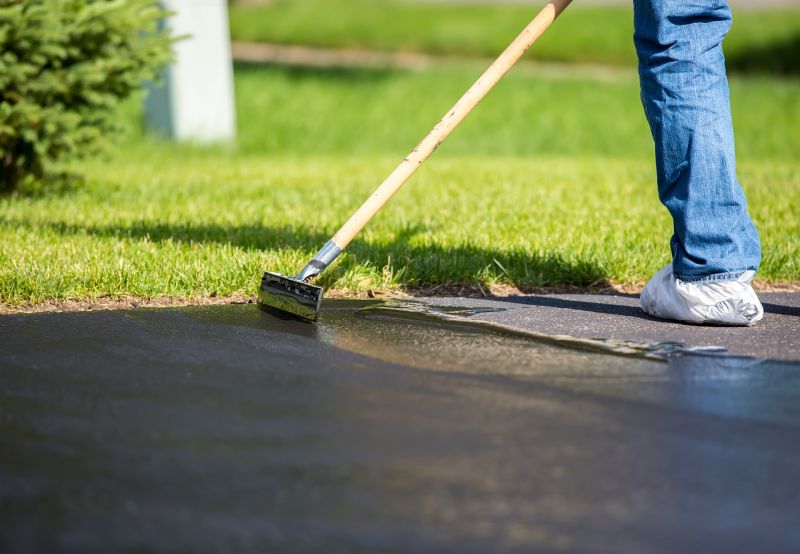 Driveway seal coating products are essential for maintaining and protecting asphalt surfaces against the elements and general wear. These products help to fill small cracks, prevent water intrusion, and provide a protective barrier that can extend the lifespan of a driveway. When selecting seal coating materials, it's important to consider the specific needs of the driveway, including its size, condition, and the type of traffic it endures. Proper application of the right product can improve the appearance and durability of the surface, making it look well-maintained and functional.
Top Overall Option
Premium Asphalt Seal Coating
This versatile asphalt seal coating product is designed for ease of application and long-lasting protection. It provides a uniform finish that helps to seal small cracks and prevent water penetration, making it suitable for various driveway conditions. Its formulation aims to deliver a smooth, durable surface that can enhance the appearance of the driveway while offering effective protection against environmental damage.
Types of Products For Driveway Seal Coating Service
Asphalt Emulsion Sealers
Water-based sealers that are easy to apply and clean up, suitable for residential driveways.
Coal Tar Sealers
Traditional sealers known for their durability and resistance to oil and gasoline spills.
Polyurethane Sealers
High-performance coatings offering excellent UV resistance and flexibility for varying conditions.
Acrylic Sealers
Fast-drying sealers that provide a glossy or matte finish, ideal for aesthetic enhancement.
Driveway Crack Fillers
Products designed to fill and seal small cracks before applying the main seal coating.
Silicone-Based Sealers
Water-repellent coatings that help prevent water penetration and damage.
Polyurea Sealers
Rapid-curing sealers with high durability, suitable for high-traffic areas.
Oil-Based Sealers
Traditional formulations offering strong adhesion and weather resistance.
Eco-Friendly Sealers
Low-VOC options designed for environmentally conscious applications.
Heavy-Duty Sealers
Formulations designed for commercial or industrial driveways with heavy vehicle traffic.
Color-Enhancing Sealers
Sealants that add vibrancy to the driveway surface while providing protection.
High-Gloss Sealers
Products that deliver a shiny, reflective finish for aesthetic appeal.
Matte Finish Sealers
Sealants that provide a non-reflective, subdued surface appearance.
Fast-Set Sealers
Formulations that cure quickly, reducing downtime after application.
Long-Lasting Sealers
Products formulated for extended durability and reduced maintenance frequency.
Popular Choices
Widely used for their ease of application and affordability, suitable for many residential driveways.
Known for their proven durability and resistance to environmental elements.
Popular for their quick drying time and aesthetic options.
Favored for their high-performance qualities in demanding conditions.
Commonly used as a preparatory step before sealing to ensure a smooth surface.
Chosen for their water-repellent properties and flexibility.
Popular for rapid application and high durability in high-traffic areas.
Trusted for their strong adhesion and weather resistance.
Often selected to boost the visual appeal of the driveway surface.
Chosen for their shiny, reflective finish that accentuates the driveway's appearance.
Preferred for a subdued, non-reflective surface look.
Ideal for projects requiring quick turnaround times.
Selected for their extended durability and minimal maintenance needs.
Seal coating can be applied using various methods, including brushes, rollers, or spray systems. The choice of application method often depends on the size of the area and the type of product used. Many products are formulated for easy application by homeowners or professional contractors, offering smooth coverage and quick drying times. Regular maintenance with appropriate seal coating products can help prevent the development of larger cracks and potholes, reducing long-term repair costs.
In addition to traditional asphalt sealers, there are specialized formulations designed for specific conditions such as high-traffic areas or surfaces exposed to harsh weather. Some products include additives for improved adhesion, UV resistance, or enhanced color retention. It's also worthwhile to consider products that offer a matte or glossy finish, depending on aesthetic preferences. Proper surface preparation, including cleaning and repairing existing damage, is crucial before applying any seal coating product to ensure optimal results.
Key Buying Considerations
- Identify the primary purpose of the driveway and choose a product suited for light or heavy traffic.
- Assess the current condition of the surface, including cracks and damage, before sealing.
- Determine whether a water-based or solvent-based sealer aligns with your application preferences.
- Consider the drying and curing times to plan application accordingly.
- Check for UV resistance if the driveway is exposed to direct sunlight regularly.
- Select a finish type—matte or glossy—based on aesthetic preferences.
- Review the product's compatibility with existing sealers or coatings on the surface.
- Evaluate ease of application, especially if DIY sealing is intended.
- Look into the longevity or durability claims to match your maintenance expectations.
- Ensure proper surface preparation, including cleaning and crack repair, for optimal results.
- Consider environmental conditions such as temperature and humidity during application.
- Review safety instructions and ventilation requirements during application.
- Compare formulations for potential VOC content if indoor or enclosed space application is involved.
- Assess the product's suitability for the specific climate and weather conditions in your area.
- Determine the overall coverage area per unit to estimate quantities needed.
This content contains affiliate links and may earn a commission at no additional cost to you.